Area Code 206
Washington
Area code 206 serves Washington, primarily Seattle, in the Pacific Time (PT) time zone. It has served the region since 01-Jan-1947.
Published: Last reviewed: Verified against NANPA and FCC records
Area Code Splits
3 area codes have been carved out of this code's original territory through geographic splits. Each split was a relief action: as demand grew, part of the region was reassigned to a new code rather than overlaying the whole territory.
Split into: area code 253 (Tacoma), area code 360 (Vancouver), area code 425 (Bellevue).
Demographics & Economics
- Total Population
- 1,054,706
- Population Density
- 1,068 people/sq miabove U.S. average (U.S.: 95 people/sq mi)
- Median Household Income
- $124,746above U.S. median (U.S.: $80,734)
- Poverty Rate
- 8.6%below U.S. average (U.S.: 12.5%)
- Unemployment Rate
- 4.8%near U.S. average (U.S.: 5.2%)
- Education Attainment
- Bachelor's Degree+56.3%above U.S. average (U.S.: 35.7%)High School or Lower17.5%
Statistics are population-weighted aggregations from Census ACS 5-year estimates. Population figures are approximate — see Sources & Methodology for details on how area code populations are derived.
See how this area code compares to all US area codes in the income ranking and density ranking.
Time Zone
- Pacific Time (PT)
NANPA Relief Status
According to the latest NANPA analysis (July 2026), this area code is not currently listed as exhausting within the next 36 months. No relief planning is in progress for this NPA.
Source: NANPA NPA Relief Planning Reports · See all relief planning statuses
Current Time
Prefix Utilization
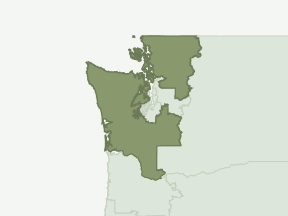
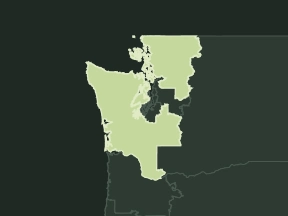
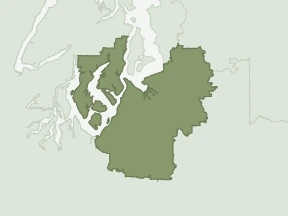
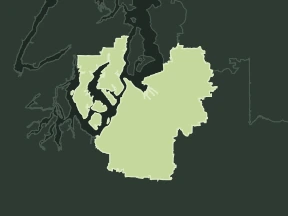
Geographic Coverage
State
WA
Major Cities
- Seattle
- Vancouver
- Everett
- Bellingham
- Marysville
- South Hill
- Shoreline
- Lacey
- Olympia
- Burien
- Bremerton
- Edmonds
- Longview
- Mount Vernon
- Graham
- Des Moines
- SeaTac
- Orchards
- Camas
- Tumwater
- Mercer Island
- Bainbridge Island
- Oak Harbor
- Hazel Dell
and 273 more cities


Historical Timeline of Area Code 206
Area code 206 was created on January 1, 1947, as one of the original 77 US NANP codes, covering the entire state of Washington. Over the following 78 years, it underwent four geographic splits and one overlay, making it one of the most frequently split original NANP codes. The 564 overlay was placed in service on June 10, 2025, ending 78 years without a supplementary code. Source: NANPA
- 1947: Area code 206 created as one of the 77 original US NANP area codes, serving the entire state of Washington. The middle digit "0" in the N0X format indicated statewide coverage under pre-1953 numbering rules. Source: NANPA
- 1957: Area code 509 split off for the eastern two-thirds of Washington, roughly following the Cascade Mountains. Area code 206 retained western Washington. This initiated a 38-year period of stability (1957–1995) despite growing demand. Source: NANPA
- 1995: Area code 360 split from 206 on January 15, 1995. 360 was one of the first interchangeable NPA codes not conforming to the traditional N0X/N1X format, breaking a 48-year convention. Seattle/Tacoma metro retained 206; the remainder transferred to 360. Source: NANPA IL-94-01-001
- 1997: A rare three-way split on April 25, 1997 created area codes 253 (Tacoma/South Sound) and 425 (Eastside/Everett) simultaneously from 206 territory. Permissive dialing ran from April 27 to November 16, 1997. Source: NANPA
- 2000: WUTC decision UT-990219 ordered a single all-services overlay of area code 564 over 206, 253, 360, and 425. Permissive dialing began September 1, 2000. Source: NANPA PL-239
- 2001: WUTC suspended the 564 overlay under Docket UT-991535 until at least October 2002. Improved numbering efficiency from thousands-block number pooling reduced immediate urgency. Source: NANPA PL-298
- 2016: WUTC approved a stepped overlay plan in Docket UT-143787: 564 would first overlay 360, then expand to 206, 253, and 425 as each exhausted. Source: WUTC
- 2017: Area code 564 introduced, initially overlaying the 360 NPA. Mandatory 10-digit dialing implemented for all western Washington NPAs, eight years before the 206 overlay arrived. Source: WUTC
- 2023: WUTC approved expansion of the 564 overlay to the 206 NPA on June 15, 2023, under Docket UT-230108. Network preparation began September 10, 2024. Source: NANPA PL-620
- 2025: The 206/564 all-services overlay was placed in service on June 10, 2025. New phone numbers in the 206 area may receive a 564 area code once all 206 prefixes are assigned. Source: WUTC Docket UT-230108
The transition from a statewide code to a Seattle-core overlay illustrates the broader pattern of area code fragmentation driven by population growth and telecommunications expansion across the Pacific Northwest.
Regulatory History
Area code 206 has undergone five significant regulatory events over 79 years, involving the Washington Utilities and Transportation Commission WUTC and NANPA. The FCC delegates numbering authority to state commissions under the Telecommunications Act of 1996 (47 U.S.C. § 251(e)(2)), and WUTC holds primary jurisdiction over Washington state numbering matters. Source: WUTC
| Year | Event | Docket | Regulatory Action & Impact |
|---|---|---|---|
| 1947 | NANP Inception | AT&T / Bell System | Area code 206 established as one of the original 77 US NANP area codes, assigned to WA. |
| 1994 | 360 relief planning for 206 | IL-94-01-001 | NANPA Informational Letter confirmed 360 as interchangeable code for relief of 206 NPA. Service date set for January 15, 1995. Source: NANPA IL-94-01-001 |
| 2000 | 564 all-services overlay ordered | UT-990219 | WUTC ordered overlay of 564 over 206, 253, 360, and 425. Permissive dialing began September 1, 2000; mandatory 10-digit dialing set for October 20, 2001. Source: NANPA PL-239 |
| 2001 | 564 overlay suspended | UT-991535 | WUTC suspended the 564 overlay and mandatory 10-digit dialing until at least October 2002. Thousands-block number pooling reduced immediate numbering pressure. Source: NANPA PL-298 |
| 2016 | Stepped overlay plan approved | UT-143787 | WUTC approved a novel stepped overlay: 564 first overlays 360, then expands to 206, 253, and 425 as each exhausts. Source: WUTC |
| 2023 | 564 expansion to 206 approved | UT-230108 | NANPA notified UTC of 206 exhaust. All-services overlay approved June 15, 2023. Network prep began September 10, 2024; service date June 10, 2025. Source: WUTC Docket UT-230108 |
County Coverage
Population-weighted county share based on aggregated ZCTA population (100% = total mapped population for area code 206).
| County | Population | Share |
|---|---|---|
| King, WA | 1,030,099 | 97.7% |
| Kitsap, WA | 24,607 | 2.3% |
Area Code 206 Family Tree
Hover over nodes to see details. Click to navigate to individual area code pages. Use scroll to zoom, drag to pan.
All Descendants
Area code 206 was originally assigned in 01-Jan-1947 to serve WA. Over the years, it has generated 4 descendant area codes through a combination of geographic splits and overlays as demand for telephone numbers grew.
Call Context
This area code serves a major metropolitan region with high population density in WA. The primary city is Seattle.
Nearby Area Codes
Area codes geographically closest to 206.
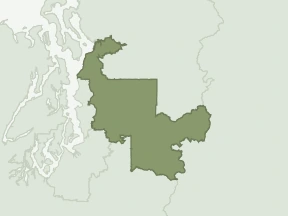
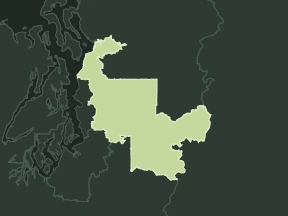
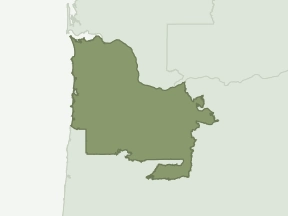
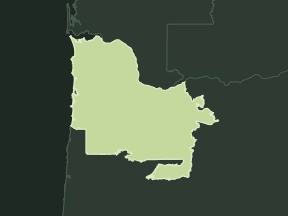
Other Area Codes in Washington
Area codes that also serve Washington, linked for easy comparison.