Area Code 216
Ohio
Area code 216 serves Ohio, primarily Cleveland, in the Eastern Time (ET) time zone. It has served the region since 01-Jan-1947.
Published: Last reviewed: Verified against NANPA and FCC records
Area Code Splits
2 area codes have been carved out of this code's original territory through geographic splits. Each split was a relief action: as demand grew, part of the region was reassigned to a new code rather than overlaying the whole territory.
Split into: area code 330 (Akron), area code 440 (Parma).
Demographics & Economics
- Total Population
- 727,424
- Population Density
- 2,725 people/sq miabove U.S. average (U.S.: 95 people/sq mi)
- Median Household Income
- $64,468below U.S. median (U.S.: $80,734)
- Poverty Rate
- 16.1%above U.S. average (U.S.: 12.5%)
- Unemployment Rate
- 6.6%above U.S. average (U.S.: 5.2%)
- Education Attainment
- Bachelor's Degree+36.5%near U.S. average (U.S.: 35.7%)High School or Lower29.8%
Statistics are population-weighted aggregations from Census ACS 5-year estimates. Population figures are approximate — see Sources & Methodology for details on how area code populations are derived.
See how this area code compares to all US area codes in the income ranking and density ranking.
Time Zone
- Eastern Time (ET)
NANPA Relief Status
According to the latest NANPA analysis (July 2026), this area code is not currently listed as exhausting within the next 36 months. No relief planning is in progress for this NPA.
Source: NANPA NPA Relief Planning Reports · See all relief planning statuses
Current Time
Prefix Utilization
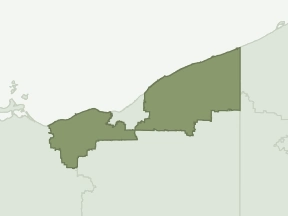
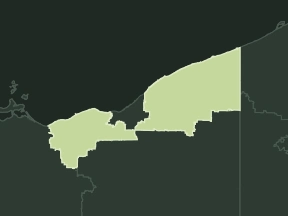
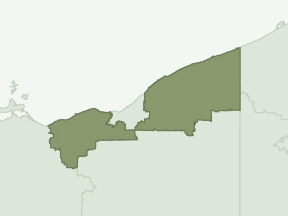
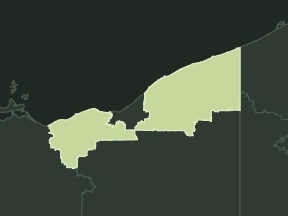
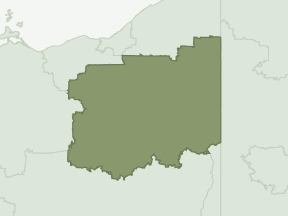
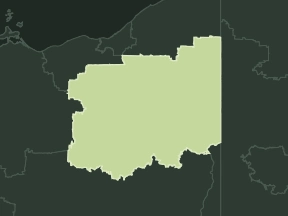
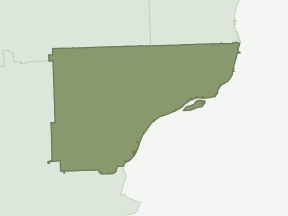
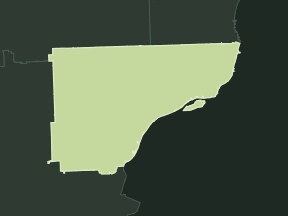
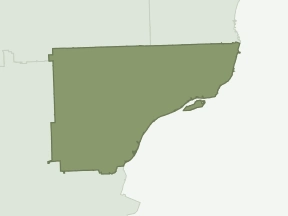
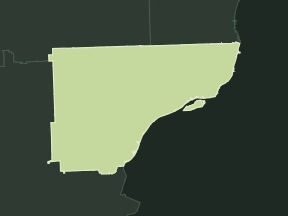
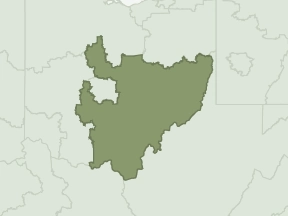
Geographic Coverage
State
OH
Major Cities
- Cleveland
- Parma
- Lakewood
- Euclid
- Cleveland Heights
- Garfield Heights
- Shaker Heights
- Maple Heights
- South Euclid
- Brook Park
- Middleburg Heights
- Lyndhurst
- Beachwood
- East Cleveland
- Warrensville Heights
- University Heights
- Seven Hills
- Brooklyn
- Bedford Heights
- Richmond Heights
- Independence
- Pepper Pike
- Orange
- Moreland Hills
and 10 more cities


Historical Timeline of Area Code 216
Area code 216 entered service on January 1, 1947 as one of the original 77 US NANP area codes. It was the first area code assigned to Ohio, covering the entire northeastern quadrant of the state from Lorain in the west to Youngstown near the Pennsylvania border, and south to Akron. The code has undergone two geographic splits, each reducing its footprint, and now serves only central Cuyahoga County. Today, 216 remains the only major US metropolitan area that retains its original 1947 area code with no overlay. Source: NANPA
Key milestones:
- 1947: Created as one of the original 77 US NANP area codes. Assigned to the entire northeastern quadrant of Ohio, the first area code in the state. (NANPA)
- 1984: AT&T divestiture placed Ohio Bell under Ameritech. Area code 216 still covered all of northeastern Ohio. (Akron Beacon Journal)
- 1996: Area code 330 split from 216, taking the southern portion including Akron, Canton, and Youngstown. Permissive dialing began March 9, 1996; mandatory dialing took effect June 29, 1996. Approximately 900,000 landlines and 100,000 wireless subscribers were affected. (NANPA)
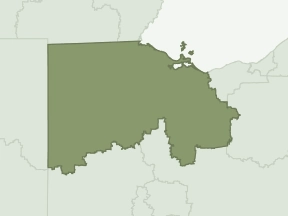
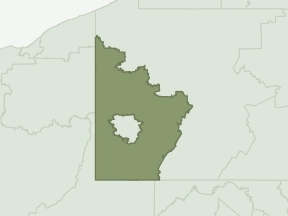
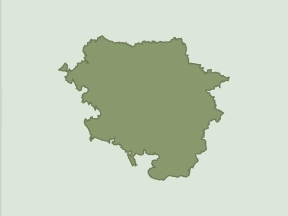
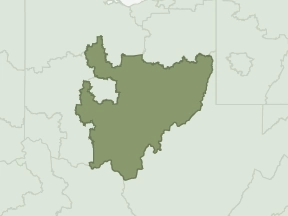
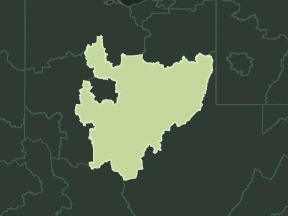
- 1997: Area code 440 split from 216 for outer-ring suburbs including Lake, Geauga, Lorain, and Medina counties. Permissive dialing began August 16, 1997; mandatory dialing took effect April 4, 1998. Area code 440 is geographically non-contiguous, with eastern and western portions joined only by a thin southern band. (NANPA)
- 2024: Area code 436 went into service March 1, 2024 as an all-services overlay of 440. Area code 216 remains the only major US city with a single original 1947 area code and no overlay. (NANPA 2025 Exhaust Analysis)
- 2025: NANPA exhaust analysis projects area code 216 relief not needed until approximately Q2 2046, giving the code at least 21 more years of capacity. (NANPA 2025-1 NRUF)
After the two splits, 216 stabilized as Cleveland's code for central Cuyahoga County. The code has not received a new overlay or split since 1997, making it one of the longest-stable area codes in the United States. Its remaining capacity through 2046 reflects both the reduced geographic footprint and effective number conservation measures managed by the Ohio Public Utilities Commission.
Regulatory History
Area code 216's regulatory history involves two primary bodies: the FCC, which established the federal numbering framework and delegated conservation authority to Ohio in 1999, and the Ohio Public Utilities Commission PUCO, which authorized the geographic splits from 216 and manages day-to-day numbering relief for the territory. Source: FCC DA-99-2635
| Year | Event | Docket | Regulatory Action & Impact |
|---|---|---|---|
| 1947 | NANP Inception | AT&T / Bell System | Area code 216 established as one of the original 77 US NANP area codes, assigned to OH. |
| 1995 | 330 split approval | PUCO | Approved geographic split creating area code 330 from the southern portion of 216 territory. 330 implemented 1996; approximately 900,000 landlines and 100,000 wireless subscribers affected |
| 1997 | 440 split approval | PUCO | Approved geographic split creating area code 440 for outer-ring suburbs. 440 implemented August 1997; mandatory April 1998; non-contiguous geographic coverage |
| 1998 | Area code relief guidelines | CC Docket No. 96-98 | Established federal guidelines for state-commission-managed area code relief. Authorized geographic splits, overlays, and boundary realignments nationwide |
| 1999 | Conservation authority delegated | DA-99-2635 | Granted Ohio PUC petition for delegated number conservation authority. Ohio PUC received authority for thousands-block pooling, rationing, and relief management. 15 FCC Rcd 1268. Source: FCC |
| 2022 | 436 overlay approved | Case 22-631-TP-COI | Approved all-services distributed overlay of area code 436 over 440. 436 activated March 1, 2024; 440 projected exhaust Q3 2024; all existing 440 subscribers retain numbers. Source: PUCO |
In November 1999, the FCC granted in part Ohio PUC's petition for authority to implement number conservation measures (DA-99-2635, 15 FCC Rcd 1268). This delegation, issued under CC Docket No. 96-98, enabled PUCO to manage area code relief for all of Ohio, including the 216 territory, through tools like thousands-block pooling, number rationing, and boundary adjustments. PUCO's management of the two splits from 216 and the 436/440 overlay for the adjacent 440 territory demonstrates the delegated authority in practice. The 436 overlay eliminated 440 as a relief option for the broader Cleveland metropolitan area and confirmed that 216's number supply is sufficient through at least 2046.
County Coverage
Population-weighted county share based on aggregated ZCTA population (100% = total mapped population for area code 216).
| County | Population | Share |
|---|---|---|
| Cuyahoga, OH | 727,424 | 100.0% |
Area Code 216 Family Tree
Hover over nodes to see details. Click to navigate to individual area code pages. Use scroll to zoom, drag to pan.
All Descendants
Area code 216 was originally assigned in 01-Jan-1947 to serve OH. Over the years, it has generated 4 descendant area codes through a combination of geographic splits and overlays as demand for telephone numbers grew.
Call Context
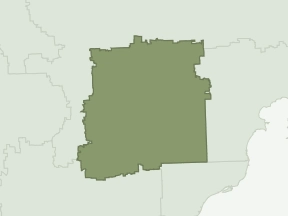
This area code serves a major metropolitan region with high population density in OH. The primary city is Cleveland.
Nearby Area Codes
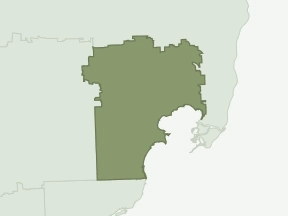
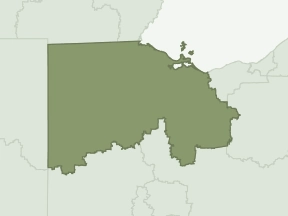
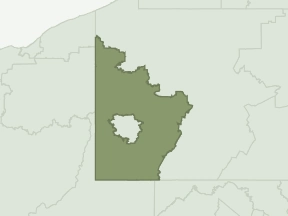
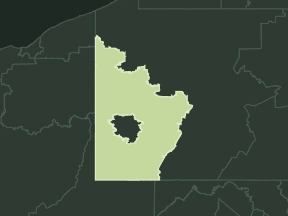
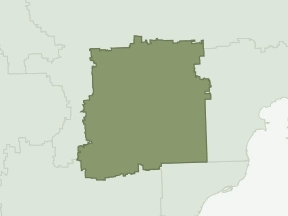
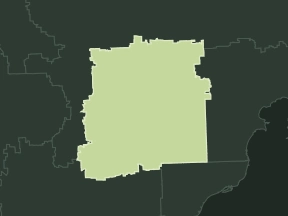
Area codes geographically closest to 216.
Other Area Codes in Ohio
Area codes that also serve Ohio, linked for easy comparison.