Area Code 304
West Virginia
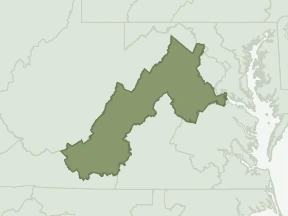
Area code 304 serves West Virginia, primarily Charleston, in the Eastern Time (ET) time zone. It has served the region since 01-Jan-1947.
Published: Last reviewed: Verified against NANPA and FCC records
Overlay Area Code
This area code shares its geographic footprint with an overlay code, so the same cities are served by two area codes. Because overlays leave existing numbers untouched, this region's relief planning favors adding codes over redrawing boundaries.
The codes serving this same region: area code 681 (Charleston).
With prefix utilization already at 98.1%, numbering resources here are under sustained pressure — context that explains why overlays were introduced.
In service since: 01-Jan-1947
Demographics & Economics
- Total Population
- 2,642,219
- Population Density
- 66 people/sq mibelow U.S. average (U.S.: 95 people/sq mi)
- Median Household Income
- $57,810below U.S. median (U.S.: $80,734)
- Poverty Rate
- 16.8%above U.S. average (U.S.: 12.5%)
- Unemployment Rate
- 5.6%near U.S. average (U.S.: 5.2%)
- Education Attainment
- Bachelor's Degree+23.5%below U.S. average (U.S.: 35.7%)High School or Lower43.3%
Statistics are population-weighted aggregations from Census ACS 5-year estimates. Population figures are approximate — see Sources & Methodology for details on how area code populations are derived.
See how this area code compares to all US area codes in the income ranking and density ranking.
Time Zone
- Eastern Time (ET)
NANPA Relief Status
According to the latest NANPA analysis (July 2026), this area code is not currently listed as exhausting within the next 36 months. No relief planning is in progress for this NPA.
Source: NANPA NPA Relief Planning Reports · See all relief planning statuses
Current Time
Prefix Utilization
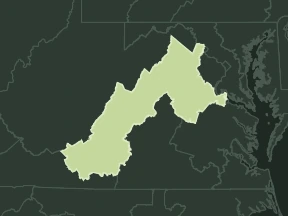
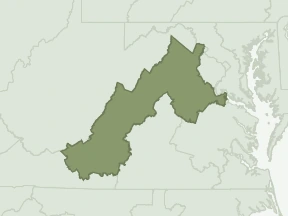
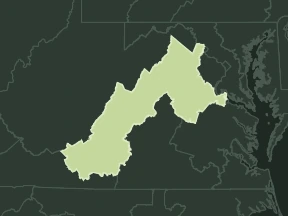
Geographic Coverage
State
WV
Major Cities
- Charleston
- Huntington
- Morgantown
- Parkersburg
- Wheeling
- Martinsburg
- Weirton
- Fairmont
- Beckley
- Clarksburg
- Teays Valley
- South Charleston
- St. Albans
- Vienna
- Cheat Lake
- Cross Lanes
- Bluefield
- Bridgeport
- Oak Hill
- Moundsville
- Dunbar
- Pea Ridge
- Nitro
- Hurricane
and 415 more cities


Historical Timeline of Area Code 304
Area code 304 was established in 1947 as one of the original 77 US NANP area codes under AT&T's National Numbering Plan. It served as the sole area code for the entire state of West Virginia for over 62 years, until area code 681 was activated as an overlay on March 28, 2009. The middle digit "0" in 304 confirmed full-state coverage under the original NANP rules, where a zero indicated an entire state and a one indicated a portion of a state. On a rotary phone, 304 required 17 pulses (3 + 10 + 4), above the average of 14.1 for codes created around the same time. Source: NANPA
Key milestones:
- 1947: Area code 304 established as one of the original 77 US NANP area codes. It covered the entire state of West Virginia, from the Eastern Panhandle to the southern coalfields. The middle digit "0" confirmed statewide coverage under original NANP conventions. Source: NANPA
- 2000: NANPA petitioned the WV Public Service Commission for area code relief due to projected exhaustion of the 304 NPA. Case No. 00-0953-T-PC was opened before the Commission. Growth of wireless devices, fax machines, and pagers was driving number demand across the state. Source: WV PSC Case 00-0953-T-PC
- May 2004: The WV PSC Working Group, comprising Commission Staff, the Consumer Advocate, and telecommunications carriers, unanimously recommended an all-services overlay for the 304 NPA. This consensus recommendation preceded the FCC pooling order by nearly two years. Source: NANPA
- March 15, 2006: The FCC issued Order 06-14 (CC Docket No. 99-200), granting the WV PSC authority to implement mandatory thousands-block number pooling in the 304 NPA. The 304 NPA was projected to exhaust in Q1 2006. Pooling allowed carriers to share blocks of 1,000 numbers instead of receiving entire 10,000-number blocks, delaying exhaustion from Q1 2006 to Q4 2008. Source: FCC 06-14
- January 29, 2008: The WV PSC ordered a geographic split along the Charleston-Clarksburg LATA boundary. The proposed split would have kept Charleston, Parkersburg, and southern cities in 304, while northern and eastern cities received a new area code. The Commission chairman dissented in favor of an overlay. Source: WV PSC Case 00-0953-T-PC
- February 13, 2008: Following petitions for reconsideration from AT&T, Verizon Wireless, and other parties, the Commission unanimously reversed its decision and ordered an all-services overlay instead. West Virginia became the first state served by a single code to install an overlay plan. Source: WV PSC Case 00-0953-T-PC
- March 21, 2008: NANPA Planning Letter 375 announced implementation details for the 681 overlay. Permissive 10-digit dialing began July 26, 2008. Source: NANPA
- February 28, 2009: Mandatory 10-digit dialing took effect for all existing 304 numbers. Source: NANPA
- March 28, 2009: Area code 681 activated as overlay for 304. New 681 numbers became available for the first time. West Virginia became the first state served by a single code to install an overlay plan. Source: NANPA
Area code 304's regulatory history reflects the broader tension in numbering policy between geographic splits and overlays. The 15-day reversal from split to overlay in January-February 2008 remains one of the fastest regulatory about-faces in US area code history, driven by industry opposition to the burden of number changes for rural customers.
FCC Regulatory History
Area code 304's regulatory history includes a critical FCC pooling order, a WV PSC case that went from split to overlay in 15 days, and the implementation details that made West Virginia's first overlay possible. The 304 NPA was one of the original 77 US NANP area codes established in 1947 and served the entire state of West Virginia until the 681 overlay in 2009. Source: NANPA
| Year | Event | Docket | Regulatory Action & Impact |
|---|---|---|---|
| 1947 | NANP Inception | AT&T / Bell System | Area code 304 established as one of the original 77 US NANP area codes, assigned to WV. |
| 2000 | Relief petition filed | Case 00-0953-T-PC | NANPA petitioned the WV PSC for area code relief due to projected exhaustion of the 304 NPA. Growth of wireless devices, fax machines, and pagers was driving number demand across the state. Source: WV PSC |
| May 2004 | Working Group recommendation | Case 00-0953-T-PC | The WV PSC Working Group unanimously recommended an all-services overlay for the 304 NPA. The recommendation included Commission Staff, the Consumer Advocate, and telecommunications carriers. Source: NANPA |
| 2006 | FCC pooling authority granted | FCC 06-14 (CC Docket 99-200) | FCC granted the WV PSC authority to implement mandatory thousands-block number pooling in 304 NPA. was projected to exhaust in Q1 2006. Pooling delayed exhaustion to Q4 2008. Source: Federal Register |
| Jan 29, 2008 | Geographic split ordered | Case 00-0953-T-PC | WV PSC ordered a geographic split along LATA boundary. Commission chairman dissented in favor of an overlay. Source: WV PSC |
| Feb 13, 2008 | Split reversed to overlay | Case 00-0953-T-PC | Following petitions for reconsideration from AT&T, Verizon Wireless, and other parties, the Commission unanimously reversed its decision and ordered an all-services overlay. WV first state with single-code overlay. Source: WV PSC |
| Mar 21, 2008 | NANPA implementation announced | PL-375 | NANPA PL-375 (March 21, 2008) provided implementation framework. Source: NANPA |
| 2009 | 681 overlay activated | NANPA PL-375 | 681 overlay activated March 28, 2009. Source: NANPA |
County Coverage
Population-weighted county share based on aggregated ZCTA population (100% = total mapped population for area code 304).
| County | Population | Share |
|---|---|---|
| Kanawha, WV | 190,432 | 7.2% |
| Monongalia, WV | 160,721 | 6.1% |
| Berkeley, WV | 141,874 | 5.4% |
| Harrison, WV | 121,381 | 4.6% |
| Cabell, WV | 112,505 | 4.3% |
| Putnam, WV | 96,649 | 3.7% |
| Wood, WV | 94,780 | 3.6% |
| Taylor, WV | 86,233 | 3.3% |
| Raleigh, WV | 83,018 | 3.1% |
| Wayne, WV | 79,429 | 3.0% |
| Brooke, WV | 79,399 | 3.0% |
| Marshall, WV | 73,893 | 2.8% |
| Marion, WV | 71,422 | 2.7% |
| Mason, WV | 62,411 | 2.4% |
| Jefferson, WV | 61,054 | 2.3% |
| Mercer, WV | 60,034 | 2.3% |
| Barbour, WV | 55,930 | 2.1% |
| Lincoln, WV | 52,955 | 2.0% |
| Fayette, WV | 49,438 | 1.9% |
| Ohio, WV | 48,124 | 1.8% |
| Greenbrier, WV | 42,381 | 1.6% |
| Preston, WV | 39,457 | 1.5% |
| Jackson, WV | 38,881 | 1.5% |
| Lewis, WV | 37,656 | 1.4% |
| Logan, WV | 35,484 | 1.3% |
| Randolph, WV | 33,839 | 1.3% |
| Morgan, WV | 33,146 | 1.3% |
| Hancock, WV | 32,442 | 1.2% |
| Nicholas, WV | 32,241 | 1.2% |
| Tyler, WV | 31,726 | 1.2% |
| Boone, WV | 31,191 | 1.2% |
| Roane, WV | 31,046 | 1.2% |
| Hampshire, WV | 30,866 | 1.2% |
| Mineral, WV | 29,889 | 1.1% |
| Grant, WV | 29,295 | 1.1% |
| Wyoming, WV | 28,205 | 1.1% |
| Upshur, WV | 26,804 | 1.0% |
| Summers, WV | 25,025 | 0.9% |
| Mingo, WV | 23,665 | 0.9% |
| Ritchie, WV | 23,105 | 0.9% |
| McDowell, WV | 22,312 | 0.8% |
| Braxton, WV | 21,445 | 0.8% |
| Monroe, WV | 21,026 | 0.8% |
| Hardy, WV | 20,688 | 0.8% |
| Doddridge, WV | 17,557 | 0.7% |
| Wetzel, WV | 16,849 | 0.6% |
| Gilmer, WV | 16,247 | 0.6% |
| Clay, WV | 14,121 | 0.5% |
| Pocahontas, WV | 13,111 | 0.5% |
| Pendleton, WV | 12,210 | 0.5% |
| Pleasants, WV | 10,977 | 0.4% |
| Webster, WV | 9,786 | 0.4% |
| Tucker, WV | 9,716 | 0.4% |
| Wirt, WV | 9,452 | 0.4% |
| Calhoun, WV | 8,696 | 0.3% |
Area Code 304 Family Tree
Hover over nodes to see details. Click to navigate to individual area code pages. Use scroll to zoom, drag to pan.
Area code 304 was originally assigned in 01-Jan-1947 to serve WV. Over the years, it has generated 1 descendant area code through a combination of geographic splits and overlays as demand for telephone numbers grew.
Call Context
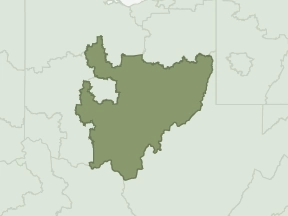
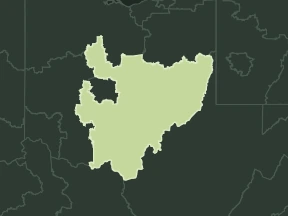
This area code spans a mix of urban centers and rural communities across WV, with Charleston as a primary city.
Nearby Area Codes
Area codes geographically closest to 304.
Other Area Codes in West Virginia
Area codes that also serve West Virginia, linked for easy comparison.