Area Code 385
Utah
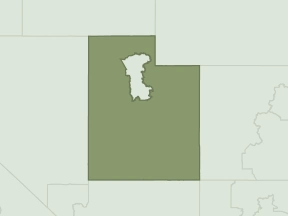
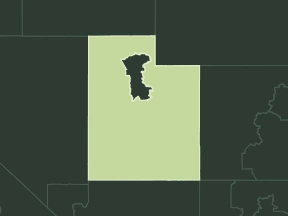
Area code 385 serves Utah, primarily Salt Lake City, in the Mountain Time (MT) time zone. It is an overlay area code sharing territory with area code 801.
Published: Last reviewed: Verified against NANPA and FCC records
Overlay Area Code
This area code shares its geographic footprint with an overlay code, so the same cities are served by two area codes. Because overlays leave existing numbers untouched, this region's relief planning favors adding codes over redrawing boundaries.
The codes serving this same region: area code 801 (Salt Lake City).
In service since: 29-Mar-2009
Demographics & Economics
- Total Population
- 940,044
- Population Density
- 10 people/sq mibelow U.S. average (U.S.: 95 people/sq mi)
- Median Household Income
- $80,632near U.S. median (U.S.: $80,734)
- Poverty Rate
- 10.0%below U.S. average (U.S.: 12.5%)
- Unemployment Rate
- 3.7%below U.S. average (U.S.: 5.2%)
- Education Attainment
- Bachelor's Degree+33.0%near U.S. average (U.S.: 35.7%)High School or Lower27.7%
Statistics are population-weighted aggregations from Census ACS 5-year estimates. Population figures are approximate — see Sources & Methodology for details on how area code populations are derived.
See how this area code compares to all US area codes in the income ranking and density ranking.
Time Zone
- Mountain Time (MT)
NANPA Relief Status
According to the latest NANPA analysis (July 2026), this area code is not currently listed as exhausting within the next 36 months. No relief planning is in progress for this NPA.
Source: NANPA NPA Relief Planning Reports · See all relief planning statuses
Current Time
Prefix Utilization
Geographic Coverage
State
UT
Major Cities
- Salt Lake City
- West Valley City
- West Jordan
- Provo
- Orem
- Sandy
- Ogden
- Layton
- Lehi
- South Jordan
- Millcreek
- Taylorsville
- Herriman
- Draper
- Murray
- Eagle Mountain
- Bountiful
- Riverton
- Saratoga Springs
- Spanish Fork
- Roy
- Pleasant Grove
- Midvale
- Springville
and 74 more cities


Historical Timeline of Area Code 385
Area code 385 is an overlay serving Utah's Wasatch Front alongside its parent code 801. The story of 385 begins with the assignment of 801 to the entire state of Utah as one of the original 77 US NANP area codes created by AT&T in 1947. For fifty years, a single code served all of Utah until explosive growth in the 1990s demanded relief.
Key milestones:
- 1947: Area code 801 assigned to all of Utah as one of the original 77 US NANP area codes established by AT&T. Source: NANPA
- 1997: September 21 — area code 801 geographically split. Area code 435 created for rural and southern Utah, reducing 801 to the five-county Wasatch Front (Davis, Morgan, Salt Lake, Utah, and Weber counties). This made 801 one of only six "doughnut" area codes in the NANP — an enclave entirely surrounded by another code (435). Source: NANPA
- 1999: Within two years of the split, rapid growth in wireless phones, pagers, and fax machines made it clear the Wasatch Front needed another area code.
- April 2000: Utah Public Service Commission (Docket 99-999-05) orders a geographic split — Salt Lake County would retain 801 while surrounding Wasatch Front counties receive new code 385. NANPA issues Planning Letter PL-231. Permissive dialing planned for December 31, 2000, with exhaust projected by June 2001. Source: Utah PSC Report and Order Docket 99-999-05
- 2001–2007: Number conservation measures — including thousands-block number pooling and sequential assignment — postpone the 385 split for over seven years. NANPA issues a series of delay planning letters: PL-248, PL-308, PL-326, PL-337, each deferring implementation as conservation extended the life of the 801 code. Source: Deseret News (July 13, 2007)
- July 12, 2007: Utah PSC (Docket 07-999-01) reverses course, rescinding the 2000 split order and selecting an all-services distributed overlay instead. The PSC declared the overlay "much less disruptive" because it allowed all residents and businesses to keep their existing numbers. Conservation measures projected to exhaust by June 2008. Source: Utah PSC Docket 07-999-01
- August 16, 2007: NANPA issues final Planning Letter PL-366 for NPA 385 to overlay NPA 801, replacing all previous planning letters. Source: NANPA Planning Letters
- June 1, 2008: Area code 385 enters service. Permissive 10-digit dialing begins across all five Wasatch Front counties. NANPA activates test number 385-600-1234 on December 1, 2008 for carrier routing verification.
- March 1, 2009: Mandatory 10-digit dialing required for all local calls in the 801/385 overlay area. March 29, 2009: earliest date new 385 central office codes could be activated for customer assignment. Source: AT&T Customer Notification
- 2009–present: With the overlay active, new numbers in the Wasatch Front are predominantly assigned 385. Adobe's $1.8 billion acquisition of Utah-based Omniture in 2009 catalyzed rapid tech sector growth, further accelerating number demand within the overlay area. Source: CNBC (Dec 2024)
Regulatory History
Area code 385's creation followed an eight-year regulatory journey that began with a geographic split order and ended with Utah's first area code overlay.
| Year | Event | Docket | Regulatory Action & Impact |
|---|---|---|---|
| 2000 | PSC orders geographic split of 801 | Docket 99-999-05 | Utah PSC approved splitting 801 into two geographic codes. 801 would retain Salt Lake County; new code for Utah, Davis, Weber, Morgan counties. |
| 2001 | NANPA Planning Letter issued | PL-231 | NANPA notified industry of the planned split. Permissive dialing period scheduled. |
| 2001-2007 | Number pooling delays implementation | PL-248, PL-308, PL-326, PL-337 | Thousands-block number pooling extended the life of 801. NANPA issued four successive planning letters postponing the split as numbering resources remained adequate. |
| 2007 | PSC reverses to overlay | Docket 07-999-01 | Utah PSC reversed the 2000 split order, approving an all-services overlay instead. Industry consensus favored overlay to avoid forcing number changes on existing customers. |
| 2007 | NANPA assigns 385 | PL-366 | NANPA Planning Letter PL-366 (August 16, 2007) officially assigned area code 385 as overlay of 801, replacing PLs 231, 248, 308, 326, 337. |
| 2008 | 385 activated | — | Area code 385 entered service June 1, 2008. Permissive 10-digit dialing began. Carriers started assigning 385 numbers to new customers. |
| 2009 | Mandatory 10-digit dialing | — | 10-digit dialing became mandatory March 1, 2009 per NANPA PL-366 and AT&T customer notification. All local calls require area code. |
County Coverage
Population-weighted county share based on aggregated ZCTA population (100% = total mapped population for area code 385).
| County | Population | Share |
|---|---|---|
| Salt Lake, UT | 1,188,010 | 44.8% |
| Utah, UT | 730,100 | 27.5% |
| Davis, UT | 402,973 | 15.2% |
| Weber, UT | 274,577 | 10.4% |
| Wasatch, UT | 43,749 | 1.6% |
| Morgan, UT | 12,585 | 0.5% |
Area Code 385 Family Tree
Hover over nodes to see details. Click to navigate to individual area code pages. Use scroll to zoom, drag to pan.
Area code 385 was originally assigned in 29-Mar-2009 to serve UT.
Call Context
This area code covers a metropolitan region in UT with moderate to high population density, centered on Salt Lake City and surrounding communities.
Nearby Area Codes
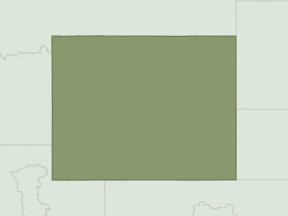
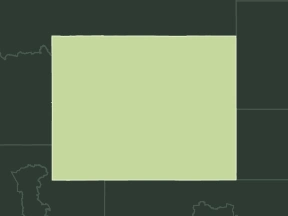
Area codes geographically closest to 385.
Other Area Codes in Utah
Area codes that also serve Utah, linked for easy comparison.