Area Code 617
Massachusetts
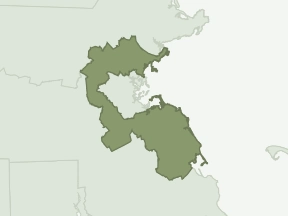
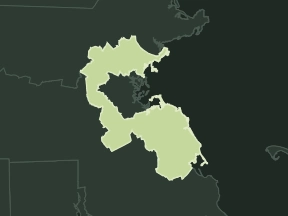
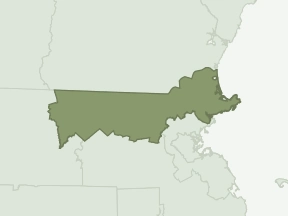
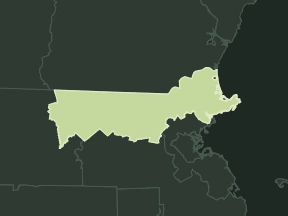
Area code 617 serves Massachusetts, primarily Boston, in the Eastern Time (ET) time zone. It has served the region since 01-Jan-1947.
Published: Last reviewed: Verified against NANPA and FCC records
Overlay Area Code
This area code shares its geographic footprint with an overlay code, so the same cities are served by two area codes. Because overlays leave existing numbers untouched, this region's relief planning favors adding codes over redrawing boundaries.
The codes serving this same region: area code 857 (Boston).
With prefix utilization already at 96.0%, numbering resources here are under sustained pressure — context that explains why overlays were introduced.
In service since: 01-Jan-1947
Area Code Splits
2 area codes have been carved out of this code's original territory through geographic splits. Each split was a relief action: as demand grew, part of the region was reassigned to a new code rather than overlaying the whole territory.
Split into: area code 508 (Worcester), area code 781 (Lynn).
Demographics & Economics
- Total Population
- 1,482,537
- Population Density
- 3,784 people/sq miabove U.S. average (U.S.: 95 people/sq mi)
- Median Household Income
- $95,631above U.S. median (U.S.: $80,734)
- Poverty Rate
- 12.4%near U.S. average (U.S.: 12.5%)
- Unemployment Rate
- 5.6%near U.S. average (U.S.: 5.2%)
- Education Attainment
- Bachelor's Degree+54.3%above U.S. average (U.S.: 35.7%)High School or Lower24.6%
Statistics are population-weighted aggregations from Census ACS 5-year estimates. Population figures are approximate — see Sources & Methodology for details on how area code populations are derived.
See how this area code compares to all US area codes in the income ranking and density ranking.
Time Zone
- Eastern Time (ET)
NANPA Relief Status
According to the latest NANPA analysis (July 2026), this area code is not currently listed as exhausting within the next 36 months. No relief planning is in progress for this NPA.
Source: NANPA NPA Relief Planning Reports · See all relief planning statuses
Current Time
Prefix Utilization
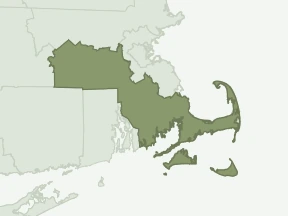
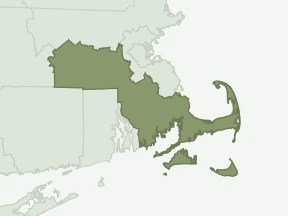
Geographic Coverage
State
MA
Major Cities
- Boston
- Cambridge
- Quincy
- Newton
- Somerville
- Brookline
- Everett
- Chelsea
- Milton
- Belmont
- South Boston
- Watertown
- Winthrop


Historical Timeline of Area Code 617
Area code 617 is one of the original 77 US NANP area codes, established by AT&T in 1947 to serve the eastern two-thirds of Massachusetts. For 41 years it was the sole area code for eastern Massachusetts until a series of splits and an overlay reshaped its territory to serve only the inner ring of Greater Boston. Source: NANPA
- 1947: AT&T announced the first nationwide telephone numbering plan in 1947, creating 77 original US area codes. Area code 617 was assigned to the eastern two-thirds of Massachusetts, from western Worcester County to Cape Cod and the South Coast — roughly 10,000+ square miles. Massachusetts was the only New England state divided into multiple numbering plan areas at creation: 617 for the east and area code 413 for the west. Source: List of Original NANP Area Codes
- July 16, 1988: First geographic split — area code 508 created for the western, northern, and southern portions of the old 617 territory, including Worcester County, the Merrimack Valley, the South Coast, and the Cape and Islands. Authorized by NANPA Information Letter IL-87/07-003. Permissive dialing through October 15, 1988. 617 retained Boston metro area including Cambridge, Waltham, and Quincy. This was the first area code split in Massachusetts history. Source: NANPA IL-87/07-003
- September 1, 1997: Second geographic split — area code 781 created for the northern, western, and southern portions of the new 617 territory. 781 almost completely surrounds 617. Authorized by NANPA Planning Letter PL-NANP-069. Permissive dialing through December 1, 1997. 617 retained inner ring communities: Boston, Cambridge, Somerville, Everett, Winthrop, Milton, Brookline. This reduced 617 from over 10,000 square miles to approximately 200 square miles — a 98% geographic reduction. Source: NANPA PL-NANP-069
- May 2, 2001: Area code 857 installed as all-services distributed overlay on 617. Authorized by NANPA Planning Letter PL-234. This was part of a simultaneous four-code overlay implementation in Eastern Massachusetts — the first time Massachusetts used overlays instead of geographic splits for area code relief. Mandatory 10-digit dialing began April 2, 2001. Permissive 10-digit dialing began September 15, 2000. Source: NANPA PL-234
From covering eastern two-thirds of Massachusetts to serving only the inner ring of Greater Boston, 617's evolution reflects the explosive growth of the Boston metropolitan area and the broader shift from geographic splits to overlay relief in the North American Numbering Plan. The 617/857 overlay complex is projected to serve the Boston region until at least 2059.
Regulatory History
Area code 617 has undergone 5 significant regulatory events over 54 years, involving the FCC, the Massachusetts Department of Telecommunications and Energy (DTE, formerly DPU), and NANPA. The FCC delegated area code relief authority to state commissions under the Telecommunications Act of 1996 (47 C.F.R. § 52.19). Source: FCC — 47 C.F.R. § 52.19
| Year | Event | Docket | Regulatory Action & Impact |
|---|---|---|---|
| 1947 | NANP established; 617 created | N/A | AT&T created 77 original US area codes. 617 assigned to eastern two-thirds of Massachusetts. Massachusetts was the only New England state divided into multiple NPAs (617 east, 413 west). Middle digit "1" indicated multi-NPA state. Source: NANPA |
| 1988 | First split: 617 to 508 | IL-87/07-003 | Geographic split creating 508 for Worcester County, Merrimack Valley, South Coast, and Cape and Islands. Authorized by NANPA IL-87/07-003. Split effective July 16, 1988. Permissive dialing through October 15, 1988. First area code split in Massachusetts history. Source: NANPA IL-87/07-003 |
| 1997 | Second split: 617 to 781 | PL-NANP-069 | Geographic split creating 781 for outer ring communities. Authorized by NANPA PL-NANP-069. Split effective September 1, 1997. Permissive dialing through December 1, 1997. 617 reduced to inner ring of Greater Boston (~200 sq mi). Ordered by Massachusetts DTE under D.P.U. 96-61. Source: NANPA PL-NANP-069 |
| 2000 | 857 overlay ordered | D.T.E. 99-11 | Massachusetts DTE ordered four simultaneous overlays in Eastern Massachusetts: 617→857, 508→774, 781→339, 978→351. First use of overlays instead of geographic splits in Massachusetts. Industry unanimously supported overlays after local number portability implementation. FCC authorized approach in FCC-99-246 (CC Docket No. 96-98). Source: Massachusetts DTE Executive Summary |
| 2001 | 857 overlay activated | PL-234 | 857 installed as all-services distributed overlay May 2, 2001. Mandatory 10-digit dialing began April 2, 2001; permissive 10-digit dialing began September 15, 2000. Test number 857-355-8378 available January 2 through August 2, 2001. Source: NANPA PL-234 |
617's regulatory history illustrates the evolution of area code relief in Massachusetts, from the original 1947 plan through two geographic splits to the state's first use of overlays in 2001. The shift from splits to overlays was driven by industry consensus after local number portability reduced anti-competitive concerns.
County Coverage
Population-weighted county share based on aggregated ZCTA population (100% = total mapped population for area code 617).
| County | Population | Share |
|---|---|---|
| Suffolk, MA | 843,021 | 56.9% |
| Middlesex, MA | 409,618 | 27.6% |
| Norfolk, MA | 229,898 | 15.5% |
Area Code 617 Family Tree
Hover over nodes to see details. Click to navigate to individual area code pages. Use scroll to zoom, drag to pan.
All Descendants
Area code 617 was originally assigned in 01-Jan-1947 to serve MA. Over the years, it has generated 7 descendant area codes through a combination of geographic splits and overlays as demand for telephone numbers grew.
Call Context
This area code serves a major metropolitan region with high population density in MA. The primary city is Boston.
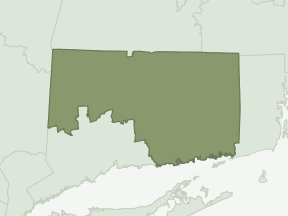
Nearby Area Codes
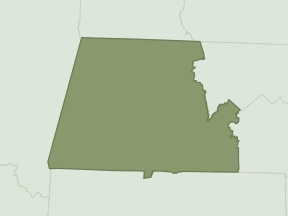
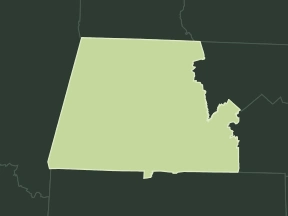
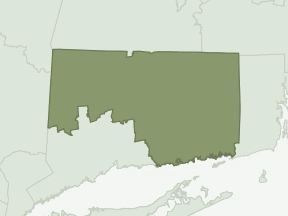
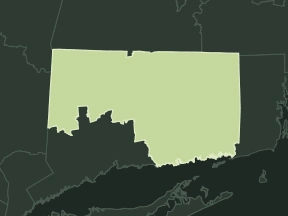
Area codes geographically closest to 617.
Other Area Codes in Massachusetts
Area codes that also serve Massachusetts, linked for easy comparison.