Area Code 281
Texas
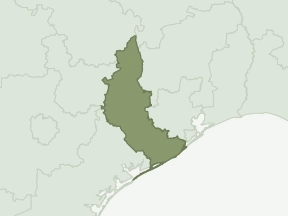
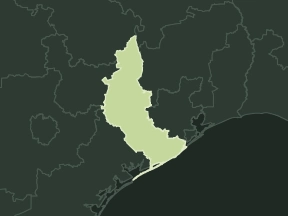
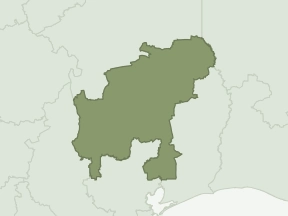
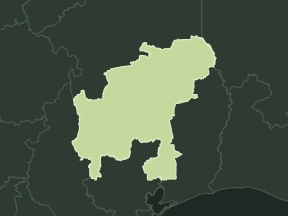
Area code 281 serves Texas, primarily Houston, in the Central Time (CT) time zone. It is an overlay area code sharing territory with area code 713.
Published: Last reviewed: Verified against NANPA and FCC records
Overlay Area Code
This area code shares its geographic footprint with an overlay code, so the same cities are served by two area codes. Because overlays leave existing numbers untouched, this region's relief planning favors adding codes over redrawing boundaries.
The codes serving this same region: area code 713 (Houston).
With prefix utilization already at 98.3%, numbering resources here are under sustained pressure — context that explains why overlays were introduced.
In service since: 02-Nov-1996
Demographics & Economics
- Total Population
- 1,283,725
- Population Density
- 67 people/sq mibelow U.S. average (U.S.: 95 people/sq mi)
- Median Household Income
- $69,803below U.S. median (U.S.: $80,734)
- Poverty Rate
- 15.2%above U.S. average (U.S.: 12.5%)
- Unemployment Rate
- 6.2%above U.S. average (U.S.: 5.2%)
- Education Attainment
- Bachelor's Degree+25.1%below U.S. average (U.S.: 35.7%)High School or Lower37.3%
Statistics are population-weighted aggregations from Census ACS 5-year estimates. Population figures are approximate — see Sources & Methodology for details on how area code populations are derived.
See how this area code compares to all US area codes in the income ranking and density ranking.
Time Zone
- Central Time (CT)
NANPA Relief Status
According to the latest NANPA analysis (July 2026), this area code is not currently listed as exhausting within the next 36 months. No relief planning is in progress for this NPA.
Source: NANPA NPA Relief Planning Reports · See all relief planning statuses
Current Time
Prefix Utilization
Geographic Coverage
State
TX
Major Cities
- Houston
- Pasadena
- Pearland
- The Woodlands
- League City
- Sugar Land
- Atascocita
- Baytown
- Missouri City
- Spring
- Channelview
- Friendswood
- Rosenberg
- Mission Bend
- La Porte
- Deer Park
- Alvin
- Fulshear
- Sienna
- Pecan Grove
- Cloverleaf
- Fresno
- Katy
- Dickinson
and 76 more cities


Historical Timeline of Area Code 281
Area code 281 entered service on November 2, 1996 as a geographic split from area code 713, serving Houston suburbs outside Beltway 8. The split boundary was erased just two years later on January 16, 1999, when 832 was added as an all-services overlay. As of January 2025, 281 is part of a five-code overlay complex (713, 281, 832, 346, 621) serving over 8 million residents in the Greater Houston metropolitan area. Source: Texas PUC.
Key milestones:
- 1947: Area code 713 established as one of the original 77 US NANP area codes in the North American Numbering Plan, assigned to southeastern Texas including Houston Source: NANPA
- March 19, 1983: Area code 409 split from 713 for Beaumont, Port Arthur, Galveston, and eastern Texas; 713 reduced to the immediate Houston area
- November 2, 1996: Area code 281 created via geographic split from 713 for Houston suburbs outside Beltway 8. The split boundary roughly followed Sam Houston Tollway (Beltway 8). 713 retained for inner-city Houston and all existing cellphone customers
- January 16, 1999: 713/281 boundary erased; area code 832 added as all-services overlay for the entire region. Mandatory 10-digit dialing implemented across the Houston metro Source: NANPA
- May 9, 2013 (Wikipedia): PUCT announced addition of 346 as fourth overlay code for the Houston area
- July 1, 2014 (Wikipedia): Area code 346 entered service as fourth overlay in the Houston complex
- October 12, 2023: PUCT approved 621 as fifth overlay for 281/346/713/832 under Project No. 54986 Source: PUCT
- January 23, 2025: Area code 621 entered service as fifth overlay in the Houston complex Source: PUCT
Area code 281 was intended as a long-term geographic split, but rapid growth from pagers and cellphones in the late 1990s exhausted available numbers within two years. The FCC's 1996 decision in CC Docket 96-98 delegated authority to state commissions to resolve area code implementation matters, allowing the Texas PUC to manage the Houston complex through successive overlays. Source: FCC.
FCC Regulatory History
Area code 281's regulatory history includes three significant FCC and Texas PUC actions spanning nearly three decades. The FCC denied Texas PUC's expedited petition in September 1996, the PUC initiated NPA relief planning in February 1997, and the PUC approved the 621 overlay in October 2023. These actions shaped the evolution of Houston's five-code overlay complex. Source: FCC
| Year | Event | Docket | Regulatory Action & Impact |
|---|---|---|---|
| 1996 | FCC Second Report and Order | CC Docket No. 96-98 | Denied Texas PUC's petition for expedited declaratory ruling on area code relief for Dallas and Houston. Delegated authority to state commissions to resolve new area code implementation matters. Established that service-specific overlays are prohibited; all-services overlays require mandatory 10-digit dialing. Directly preceded the 281 split implementation on November 2, 1996 Source: FCC |
| 1997 | NPA Relief Planning Initiated | PUCT Filing 16899 | Texas PUC initiated NPA relief planning for 214/972, 713/281, and 512 area codes. Final Order issued July 10, 1998. PUC petitioned FCC for expedited temporary waiver of 47 CFR 52.19 on July 24, 1998. This planning phase led to the 832 overlay in 1999 Source: NANPA |
| 2023 | 621 Overlay Approved | PUCT Project No. 54986 | Texas PUC approved 621 as fifth all-services distributed overlay for the 281/346/713/832 NPA complex. 621 CO codes available only when all assignable codes in 281, 346, 713, and 832 are exhausted. Network preparation began April 23, 2024; in-service date January 23, 2025 Source: PUCT |
County Coverage
Population-weighted county share based on aggregated ZCTA population (100% = total mapped population for area code 281).
| County | Population | Share |
|---|---|---|
| Harris, TX | 5,201,146 | 64.2% |
| Fort Bend, TX | 1,310,165 | 16.2% |
| Montgomery, TX | 473,282 | 5.8% |
| Brazoria, TX | 349,277 | 4.3% |
| Galveston, TX | 267,619 | 3.3% |
| Waller, TX | 248,151 | 3.1% |
| Chambers, TX | 130,055 | 1.6% |
| Liberty, TX | 104,248 | 1.3% |
| San Jacinto, TX | 17,816 | 0.2% |
| Polk, TX | 240 | 0.0% |
Area Code 281 Family Tree
Hover over nodes to see details. Click to navigate to individual area code pages. Use scroll to zoom, drag to pan.
Area code 281 was originally assigned in 02-Nov-1996 to serve TX.
Call Context
This area code covers a metropolitan region in TX with moderate to high population density, centered on Houston and surrounding communities.
Nearby Area Codes
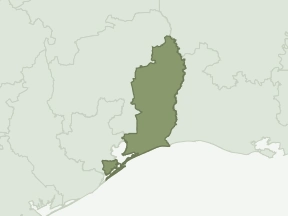
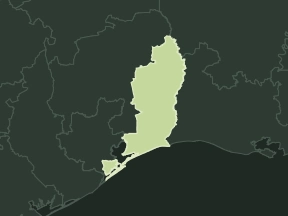
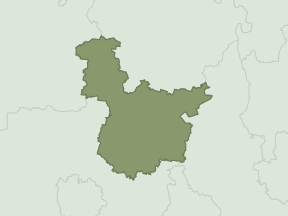
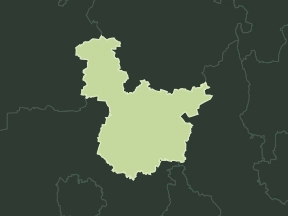
Area codes geographically closest to 281.
Other Area Codes in Texas
Area codes that also serve Texas, linked for easy comparison.