Area Code 310
California
Area code 310 serves California, primarily Los Angeles, in the Pacific Time (PT) time zone. It has served the region since 02-Nov-1991.
Published: Last reviewed: Verified against NANPA and FCC records
Overlay Area Code
This area code shares its geographic footprint with an overlay code, so the same cities are served by two area codes. Because overlays leave existing numbers untouched, this region's relief planning favors adding codes over redrawing boundaries.
The codes serving this same region: area code 424 (Los Angeles).
With prefix utilization already at 98.3%, numbering resources here are under sustained pressure — context that explains why overlays were introduced.
In service since: 02-Nov-1991
Area Code Splits
One area code has been carved out of this code's original territory through a geographic split. Each split was a relief action: as demand grew, part of the region was reassigned to a new code rather than overlaying the whole territory.
Split into: area code 562 (Long Beach).
Demographics & Economics
- Total Population
- 1,891,078
- Population Density
- 2,331 people/sq miabove U.S. average (U.S.: 95 people/sq mi)
- Median Household Income
- $90,112above U.S. median (U.S.: $80,734)
- Poverty Rate
- 13.7%near U.S. average (U.S.: 12.5%)
- Unemployment Rate
- 7.3%above U.S. average (U.S.: 5.2%)
- Education Attainment
- Bachelor's Degree+36.0%near U.S. average (U.S.: 35.7%)High School or Lower31.9%
Statistics are population-weighted aggregations from Census ACS 5-year estimates. Population figures are approximate — see Sources & Methodology for details on how area code populations are derived.
See how this area code compares to all US area codes in the income ranking and density ranking.
Time Zone
- Pacific Time (PT)
NANPA Relief Status
According to the latest NANPA analysis (July 2026), this area code is not currently listed as exhausting within the next 36 months. No relief planning is in progress for this NPA.
Source: NANPA NPA Relief Planning Reports · See all relief planning statuses
Current Time
Prefix Utilization
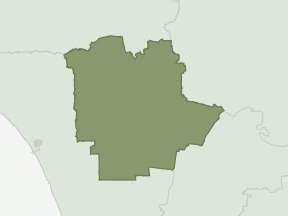
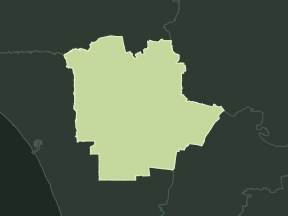
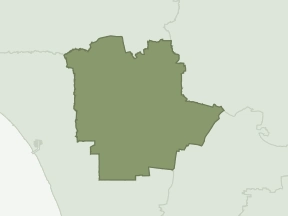
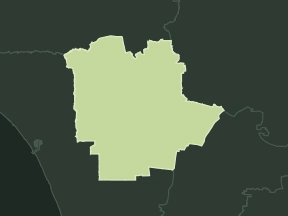
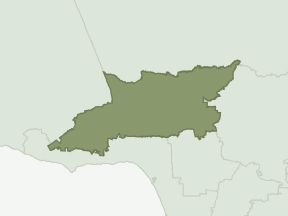
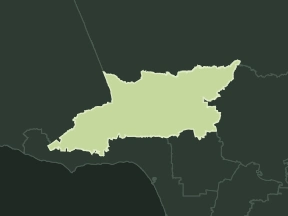
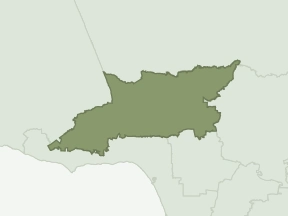
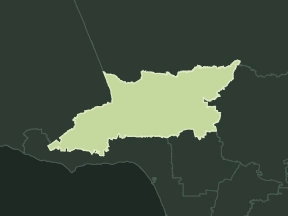
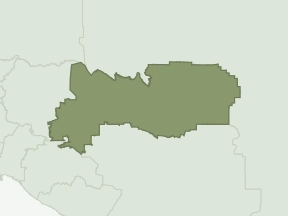
Geographic Coverage
State
CA
Major Cities
- Los Angeles
- Torrance
- Inglewood
- Compton
- Carson
- Santa Monica
- Hawthorne
- Redondo Beach
- Lynwood
- Gardena
- Rancho Palos Verdes
- Culver City
- West Hollywood
- Manhattan Beach
- Beverly Hills
- Lawndale
- West Rancho Dominguez
- West Carson
- Willowbrook
- Lomita
- Lennox
- Hermosa Beach
- El Segundo
- East Rancho Dominguez
and 13 more cities


Historical Timeline of Area Code 310
Area code 310 has one of the most eventful histories of any North American numbering plan area, marked by a geographic split, a controversial overlay fight, and a seven-year regulatory saga. The story begins with the original 213 area code, established in 1947 as one of the first three California area codes serving the entire Los Angeles region. Source: NANPA
- November 2, 1991: Area code 310 is created from a geographic split of area code 213 to relieve number exhaustion in the Los Angeles region. The new 310 NPA covers the Westside, South Bay, and Harbor areas of Los Angeles County, including Beverly Hills, Santa Monica, Malibu, Torrance, and Long Beach. Source: CPUC D.03-10-060
- January 25, 1997: Area code 562 is split from 310, taking the southeastern portion of Los Angeles County (Long Beach, Gateway Cities) and parts of Orange County. The split was originally intended as an overlay for cellular and pager services, but the CPUC chose a geographic split instead. Source: NANPA
- May 7, 1998: The CPUC issues Decision D.98-05-021, approving area code 424 as an all-services overlay for 310 — the first area code overlay ever approved in California. The decision required mandatory 1+10-digit dialing for all local calls. Source: CPUC Comment Decision — 310 Relief Background
- September 9, 1999: The California State Assembly passes the Consumer Area Code Relief Act of 1999, pressuring the CPUC to halt the overlay. One week later, on September 16, 1999, the CPUC adopts Decision D.99-09-067, suspending the 424 overlay and instituting number conservation measures including number pooling and fill rate requirements. Source: CPUC Comment Decision — 310 Relief Background
- March 16, 2000: The CPUC Telecommunications Division releases a report finding at least 3 million unused telephone numbers in the 310 area code, revealing that perceived exhaustion was largely a distribution problem. Of 2.7 million unused numbers held by carriers, 470,000 were in blocks with less than 10% contamination. Source: CPUC Report on the 310 Area Code (March 2000)
- September 29, 2000: The CPUC adopts Decision D.00-09-073, approving a geographic split (Alternative 1A) as a backup contingency plan. NANPA projected the split 310 NPA would have a life of only 3.2 years, making it an inefficient relief option. Source: CPUC D.00-09-073 — Geographic Split Backup Plan
- August 25, 2005: The CPUC unanimously approves the all-services overlay for 310 in Decision D.05-08-040, replacing the geographic split backup plan. PUC President Michael R. Peevey stated: "The overlay approved today is the first time this form of area code relief has been used in California." Source: CPUC Press Release — PUC Approves All-Services Overlay for 310
- July 26, 2006: Mandatory 1+10-digit dialing begins for all calls within the 310/424 area. New 424 numbers begin to be assigned on August 26, 2006, completing the first overlay implementation in California history. Source: CPUC D.05-08-040 — All-Services Overlay Approval
FCC Regulatory History
The regulatory history of area code 310 reflects California's evolution from aggressive area code splits to conservation-first policies. Source: CPUC Comment Decision — 310 Relief Background
| Year | Event | Docket | Regulatory Action & Impact |
|---|---|---|---|
| 1991 | Split from 213 | NANPA | Area code 310 created as a split from area code 213. |
| 1998 | First overlay approved in California | D.98-05-021 | CPUC approves area code 424 as an all-services overlay for 310 — the first overlay in California. Required mandatory 1+10-digit dialing, generating immediate public opposition. Source: CPUC Comment Decision |
| 1999 | Overlay suspended; conservation measures adopted | D.99-09-067 | After the Consumer Area Code Relief Act of 1999 (September 9), the CPUC suspends the overlay on September 16, 1999, instituting number pooling, fill rate requirements, and sequential numbering rules. Source: CPUC Comment Decision |
| 2000 | Backup geographic split adopted | D.00-09-073 | CPUC adopts a geographic split (Alternative 1A) as a backup plan. Split would divide 310 along Imperial Highway. NANPA projected the split 310 NPA would have a life of only 3.2 years. Source: CPUC D.00-09-073 |
| 2003 | FCC contamination threshold waiver | D.03-10-060 | FCC raises contamination threshold from 10% to 25% for 310 and 909, extending 310's life by one month. Carriers return 413 additional blocks to the number pool. CPUC adopts 75% fill rate requirement. Source: CPUC D.03-10-060 |
| 2005 | All-services overlay approved (final) | D.05-08-040 | CPUC unanimously approves the 424 overlay, replacing the geographic split plan. PUC President Peevey: "The first time this form of relief has been used in California." Mandatory 10-digit dialing begins July 26, 2006. Source: CPUC D.05-08-040 |
| 2006 | Overlay implemented | NANPA PL | Mandatory 1+10-digit dialing takes effect July 26, 2006. New 424 numbers assigned from August 26, 2006. The 310/424 overlay becomes the first in California. Source: CPUC Press Release |
County Coverage
Population-weighted county share based on aggregated ZCTA population (100% = total mapped population for area code 310).
| County | Population | Share |
|---|---|---|
| Los Angeles, CA | 1,875,164 | 99.2% |
| Ventura, CA | 15,914 | 0.8% |
Area Code 310 Family Tree
Hover over nodes to see details. Click to navigate to individual area code pages. Use scroll to zoom, drag to pan.
Area code 310 was originally assigned in 02-Nov-1991 to serve CA. Over the years, it has generated 2 descendant area codes through a combination of geographic splits and overlays as demand for telephone numbers grew.
Call Context
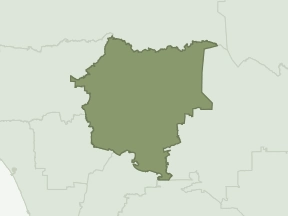
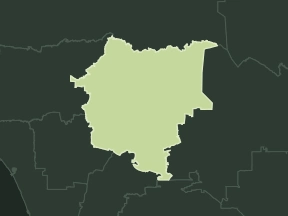
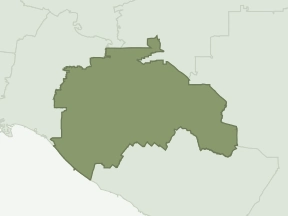
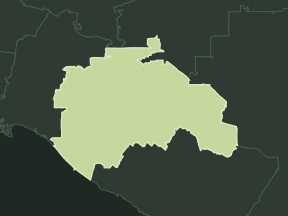
This area code serves a major metropolitan region with high population density in CA. The primary city is Los Angeles.
Nearby Area Codes
Area codes geographically closest to 310.
Other Area Codes in California
Area codes that also serve California, linked for easy comparison.