Area Code 386
Florida
Area code 386 serves Florida, primarily Deltona, in the Eastern Time (ET) time zone. It was created from a split of area code 904.
Published: Last reviewed: Verified against NANPA and FCC records
Split Area Code
This area code exists because its parent region ran low on available numbers: the parent territory was divided geographically, this code took over one part of it, and the parent kept serving the rest. Existing customers generally keep their numbers — only the code changes for the newly drawn region.
This area code was split from area code 904 (Jacksonville).
In service since: 15-Feb-2001
Demographics & Economics
- Total Population
- 1,164,392
- Population Density
- 158 people/sq miabove U.S. average (U.S.: 95 people/sq mi)
- Median Household Income
- $70,044below U.S. median (U.S.: $80,734)
- Poverty Rate
- 13.5%near U.S. average (U.S.: 12.5%)
- Unemployment Rate
- 4.7%near U.S. average (U.S.: 5.2%)
- Education Attainment
- Bachelor's Degree+26.0%below U.S. average (U.S.: 35.7%)High School or Lower35.4%
Statistics are population-weighted aggregations from Census ACS 5-year estimates. Population figures are approximate — see Sources & Methodology for details on how area code populations are derived.
See how this area code compares to all US area codes in the income ranking and density ranking.
Time Zone
- Eastern Time (ET)
NANPA Relief Status
According to the latest NANPA analysis (July 2026), this area code is not currently listed as exhausting within the next 36 months. No relief planning is in progress for this NPA.
Source: NANPA NPA Relief Planning Reports · See all relief planning statuses
Current Time
Prefix Utilization
Geographic Coverage
State
FL
Major Cities
- Deltona
- Palm Coast
- Daytona Beach
- Port Orange
- Ormond Beach
- DeLand
- New Smyrna Beach
- Edgewater
- DeBary
- Lake Butler
- South Daytona
- Holly Hill
- Alachua
- Palatka
- Newberry
- Ormond-by-the-Sea
- Live Oak
- High Springs
- Flagler Beach
- Samsula-Spruce Creek
- Daytona Beach Shores
- Jasper
- Flagler Estates
- Bunnell
and 31 more cities


Historical Timeline of Area Code 386
Area code 386 traces its origins to the broader restructuring of Florida's telephone numbering plan. In 1947, the original North American Numbering Plan assigned a single area code — 305 — to the entire state of Florida. Over the following decades, population growth and increasing demand for telephone service led to a series of splits and new area codes.
In 1965, area code 904 was split from 305 to serve northern Florida. By the 1990s, the 904 region had become the most populous area code in the state, prompting further relief actions. In 1995, area code 352 was carved out of 904 to serve Gainesville and the Nature Coast. Two years later, in 1997, the Florida Public Service Commission enacted another major split: the panhandle received area code 850, while Jacksonville and the Daytona Beach corridor retained 904.
The 904 NPA continued to face exhaustion pressure. In 1999, the North American Numbering Plan Administration declared extraordinary jeopardy for 904, and Docket No. 990517-TL was opened for relief planning. The Florida PSC ultimately approved a geographic split creating area code 386 on November 3, 2000, via Order No. PSC-00-1937-PAA-TL. The code was formally assigned on November 9, 2000, and activated for service on February 15, 2001.
Area code 386 was designed as a non-contiguous area code — one of the rarest configurations in North America — comprising two separate geographic sections: a southern portion anchored by the Daytona Beach metropolitan area, and a northwestern portion covering rural counties such as Columbia, Suwannee, and Hamilton. The two sections are divided by the 904 and 352 area codes.
Shortly after activation, mandatory ten-digit dialing took effect on November 5, 2001. In 2002, the Florida PSC addressed the Osteen exception in Docket No. 010743-TL — a small area of Volusia County that had been excluded from the 386 NPA because residents voted to retain their existing 407 numbers.
In subsequent years, boundary elimination overlays involving 386 were proposed as a relief option for neighboring area codes. In 2019, such a proposal was considered for 850 NPA relief but rejected in favor of a simple 448 overlay. In 2022, a boundary elimination overlay with 386 was again considered for 904 relief but was rejected; area code 324 was approved as a simple overlay instead, activating on February 26, 2024.
As of October 2025, NANPA's NPA Exhaust Analysis projects that area code 386 will not exhaust until the fourth quarter of 2044, giving it a projected life span of over 43 years — one of the longest in Florida.
FCC Regulatory History
The regulatory history of area code 386 encompasses five major proceedings before the Florida Public Service Commission (PSC), spanning from the initial relief planning in 1999 through the most recent exhaustion analysis in 2022. The following table summarizes the key regulatory decisions that shaped the 386 numbering plan area.
| Year | Event | Docket | Regulatory Action & Impact |
|---|---|---|---|
| 1999 | 904 NPA Relief Proceeding | Docket 990517-TL | NANPA declared extraordinary jeopardy for 904; the PSC initiated proceedings to evaluate relief options for northern Florida. |
| 2000 | Final Order Creating 386 | Order PSC-00-1937-PAA-TL | The PSC approved a geographic split of 904, creating area code 386 as a non-contiguous NPA covering the Daytona Beach corridor and northwestern rural counties. |
| 2002 | Osteen Exception Proceeding | Docket 010743-TL | The PSC addressed the exclusion of the Osteen area of Volusia County from the 386 NPA. Residents had voted to retain their 407 numbers, and the PSC found no viable mechanism to bring them into 386. |
| 2019 | 850 NPA Relief — Boundary Elimination Overlay Rejected | Docket 20190135-TP (Order PSC-2019-0471-FOF-TP | A boundary elimination overlay involving 386 was considered as a relief option for the 850 area code. The PSC rejected this approach and instead approved a simple 448 overlay for 850. |
| 2022 | 904 NPA Relief — Boundary Elimination Overlay Rejected | Docket 20220036-TP | The PSC again considered eliminating the 386/904 boundary to provide relief for 904. The proposal was rejected in favor of a simple overlay, and area code 324 was approved for the 904 region. |
The pattern of boundary elimination overlay rejections in both 2019 and 2022 reflects the regulatory preference for simpler numbering solutions that avoid disrupting existing service boundaries. Despite these rejections, the 386 NPA has remained stable with no overlay since its creation, and NANPA projects it will remain viable through at least Q4 2044.
County Coverage
Population-weighted county share based on aggregated ZCTA population (100% = total mapped population for area code 386).
| County | Population | Share |
|---|---|---|
| Volusia, FL | 580,037 | 49.8% |
| Flagler, FL | 176,885 | 15.2% |
| Columbia, FL | 89,202 | 7.7% |
| Suwannee, FL | 86,103 | 7.4% |
| Putnam, FL | 65,529 | 5.6% |
| Alachua, FL | 43,479 | 3.7% |
| Lake, FL | 34,633 | 3.0% |
| Gilchrist, FL | 17,758 | 1.5% |
| Union, FL | 15,250 | 1.3% |
| Bradford, FL | 15,094 | 1.3% |
| Hamilton, FL | 14,757 | 1.3% |
| Lafayette, FL | 13,248 | 1.1% |
| Dixie, FL | 6,263 | 0.5% |
| St. Johns, FL | 4,596 | 0.4% |
| Clay, FL | 1,558 | 0.1% |
Area Code 386 Family Tree
Hover over nodes to see details. Click to navigate to individual area code pages. Use scroll to zoom, drag to pan.
Area code 386 was originally assigned in 15-Feb-2001 to serve FL.
Call Context
This area code covers a metropolitan region in FL with moderate to high population density, centered on Deltona and surrounding communities.
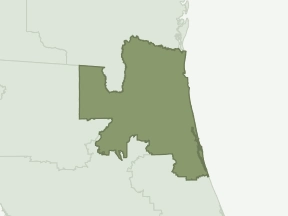
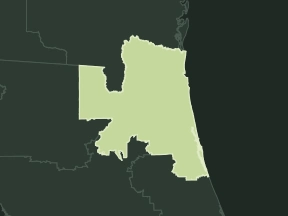
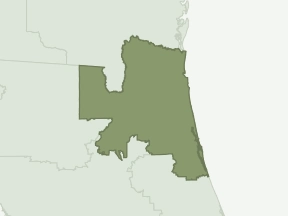
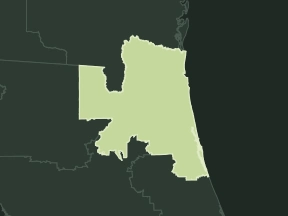
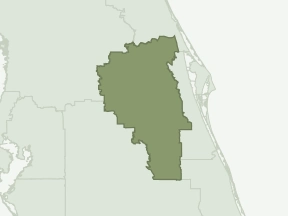
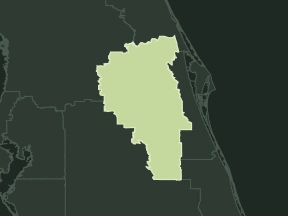
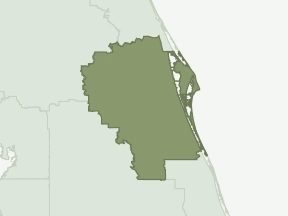
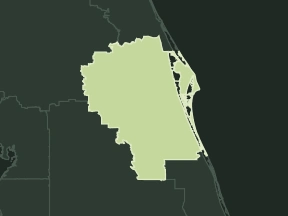
Nearby Area Codes
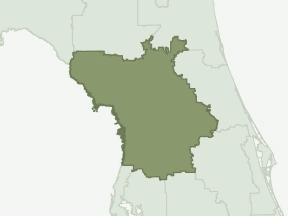
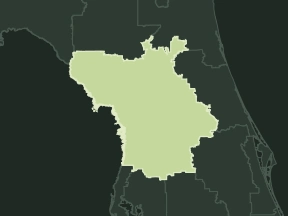
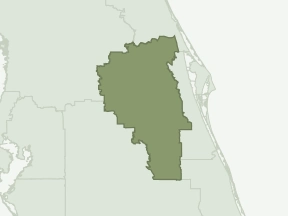
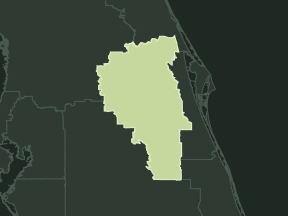
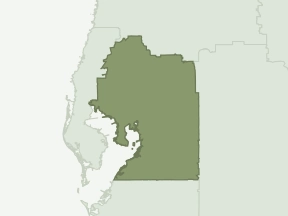
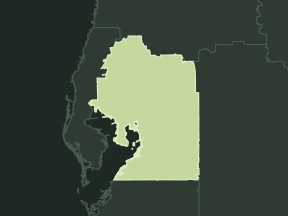
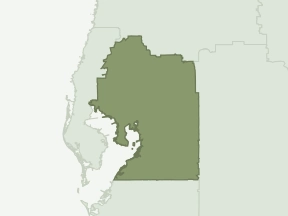
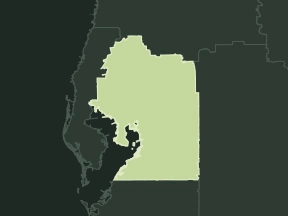
Area codes geographically closest to 386.
Other Area Codes in Florida
Area codes that also serve Florida, linked for easy comparison.